
Bryan Fish
One $9 million showroom in Scottsdale has a lesson for every hotel owner.
Nobody in their right mind would build this space.
That’s not me talking. That’s Jeff Emmons, the guy who built it.
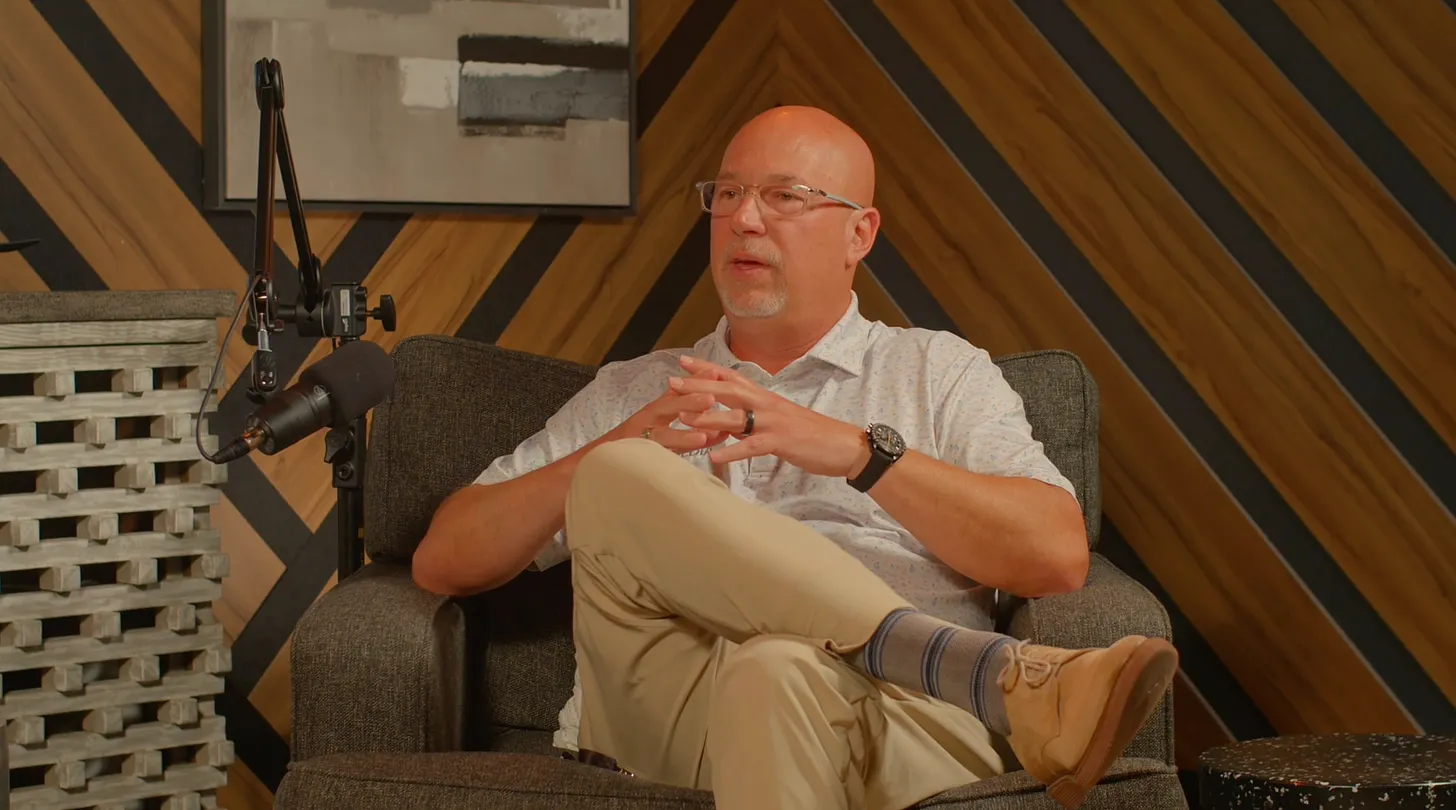
Jeff is the CEO of Immedia Integrated Technologies, the Southwest’s leading AV integration firm, and I recently sat down with him for an episode of Check-In with Bryan at NextSpace Studios (our home studio) — his 14,000-square-foot experience center in Scottsdale.
Now, this amazing space is just the current chapter of a longer story. Prior to developing and building Nextspace, Immedia’s former offices were home to three less than stellar demo rooms. However, even with those, as Jeff described them, “dumpy” demo rooms - clients would visit and were instantly happier as they were able to experience the technology for themselves.
This led Jeff to convince his business partner that it was time they built their own office and do it big.
“And pretty soon we ended up with a dozen partners that said, yeah, we need a showroom. That’d be great. And so, what started out with a budget of about $600,000 of furniture, fixtures, and equipment ended up with approaching 9 million.” - Jeff Emmons, Immedia
Most commercial buildouts run maybe $80 a square foot in furniture, fixtures, and equipment. NextSpace is close to $300. What started as a $600,000 budget ended up approaching $9 million. This massive increase in investment was made possible by the visionary thought to bring all of the partners Immedia works with to deliver products and services to their mutual client bases - right into one facility, creating a fully rounded experience for clients looking to build or renovate their spaces.
And here’s the thing: it might be the smartest money he ever spent. There’s a lesson in it for every hotel owner and operator — especially the ones who think their meeting space is just four walls and a screen on wheels.
You can’t sell what people can’t feel
Jeff’s been designing technology spaces for over 20 years — by his count, around 20,000 of them. He told me to imagine I’m from another planet and have never seen a vehicle — and he’s trying to explain the difference between a moped, a Ferrari, and a dump truck. That’s what it’s like, he said, for most clients buying technology. They nod along, sign off on the pickup truck, watch it get value-engineered down to a toy truck, and then say, “this isn’t at all what we needed.”
Jeff stopped explaining and started showing. First with those three little demo rooms in his old office — and customer satisfaction scores jumped almost immediately. Then he went big: 14 unique conference-style spaces, over a hundred manufacturer partners, $3 million in technology, all in one building. No Immedia logo anywhere. Completely brand-agnostic, open even to his competitors.
The results? Immedia went from about $3 million in projects under design contract to about $40 million in roughly 18 months. They’re now engaged with their clients years in advance — before the broker, before the architect, before the general contractor.
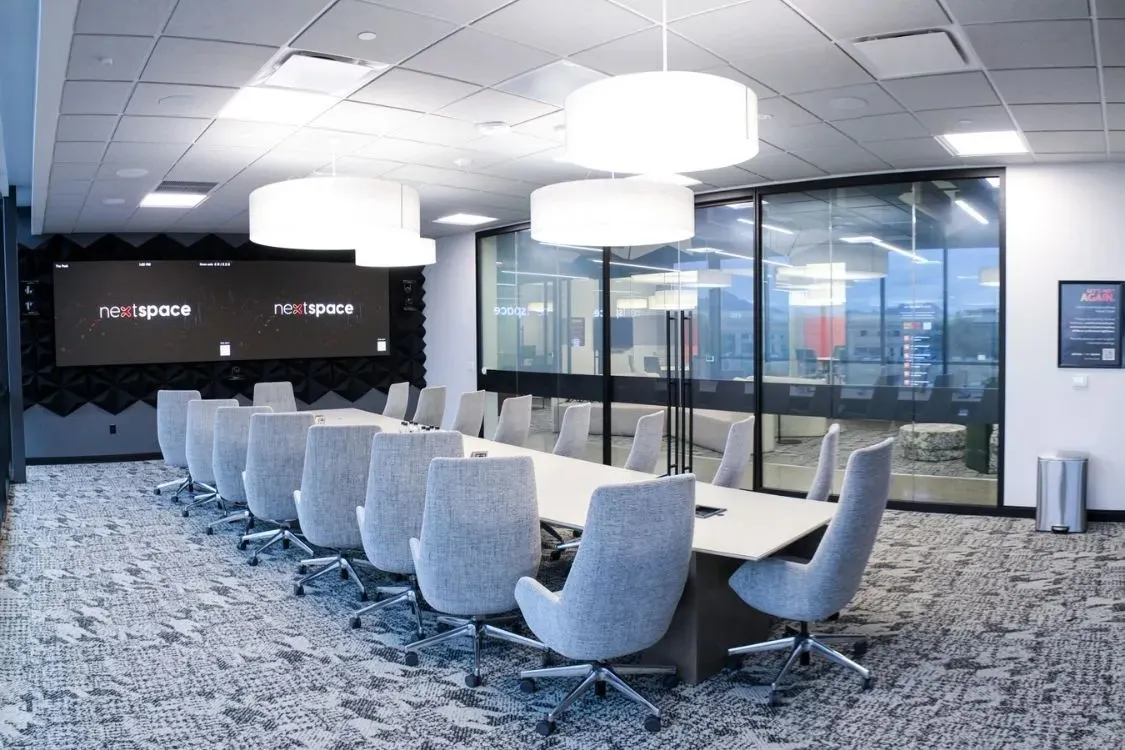
One story says it all. A global real estate executive walked out of the NextSpace boardroom — a room that would cost close to $400,000 to replicate — and admitted he’d value-engineered acoustics out of every project he’d done for nine years, around the world. It took standing in that room, hearing a whisper from 30 feet away, to understand how big a mistake that was.
People don’t buy specs. They buy experiences. Which brings me to hotels.
The meeting room money we’re leaving on the table
Consider the scale of what’s at stake. The U.S. meetings industry generates approximately $30 billion — more than $1 in every $5 of total hotel room revenue, according to Kalibri Labs. Layer in ancillary spending like food and beverage, ground transportation, and audiovisual rental, and the number climbs to over $110 billion. Meetings and event bookings were up 28% in 2024 alone. The opportunity is enormous. The execution is where most hotels fall short.
If you’ve ever booked an event at a hotel, you know the drill: the AV company rolls in a projector and a microphone and charges $1,500 for the day — gear you could buy outright for not much more. The big rental firms have built fortunes on equipment that pays for itself after about three rentals. After that, it’s nearly pure margin. And the hotel only sees a commission slice of that bill.
Meanwhile, the in-room experience is often atrocious. Temporary gear, cables everywhere, and nobody on staff who can fix it when it breaks mid-meeting.
So why don’t more hotels build the technology in? When I ask owners, the answer is always the same: “If it’s built in, we can’t charge for it anymore.”
I disagree, and so does Jeff. That’s not a technology problem — it’s a sales process problem.
If your salespeople walk a client into a boardroom where everything just works — you press a button, enter a code, and your Teams call is live with great cameras and great audio — and they say, “the rate is X, and everything’s included,” nobody flinches. I’ve used that exact setup at NextSpace for client meetings, and I’ll be honest: I’m in the hospitality business, and I’d rather hold a meeting there than at most hotels. That should bother all of us.
Here’s another way to see the scope of the problem: industry benchmarks show that average hotel meeting and banquet space utilization hovers around 40 to 50 percent when measured across all available hours — not just peak periods. That means more than half of your rentable square footage is generating zero revenue on any given day. And yet the conversation among most owners stays focused almost entirely on room revenue, even though rooms account for only about 68 cents of every dollar a hotel earns.
The objection reminds me of the free breakfast fallacy. Owners think breakfast is the cheapest amenity they offer. It’s actually one of the most expensive — once you add labor, food cost, utilities, and cleanup, you’ve essentially paid your guests to eat. The food itself might be $8 or $9 a head, but that’s not the real number. The biggest sin hotel owners and developers commit is not looking deeper at the operational impact — where the bleed actually is, and where the revenue actually hides. Built-in AV is the same blind spot in reverse: we assume we can’t monetize it, when we’ve simply never trained our teams to sell it.
The biggest opportunity isn’t where you think
Here’s the part that surprised me most. The properties that stand to gain the most from built-in meeting technology aren’t the convention hotels with 100,000 square feet of meeting space — those will always need a dedicated AV provider, because large events are custom every time.
It’s the select-service properties. The Holiday Inns and Courtyards of the world, where the meeting room sits underused because running it depends on a general manager who has fourteen other jobs. Select-service is by far the most common hotel type in the U.S. — nearly 70% of American hotels have 50 or fewer rooms. And according to Knowland data, small groups of 200 or fewer attendees make up 69% of all meeting volume. These aren’t convention center crowds. They’re exactly the size that fits a well-equipped, self-serve meeting room at a Courtyard or a Holiday Inn Express. Build in reliable, simple, self-serve technology, and that dead space becomes a revenue stream — room rental plus a technology fee, sold confidently as “everything’s included, and it works.” Full-service hotels with meeting space saw group RevPAR jump 7.3% in Q1 2025, with average daily rates for group business up 4.5% year-over-year. The demand is there. The question is whether your space is equipped to capture it.
One more number from Jeff that should make every hotelier think: even his showroom sat empty 90% of the time. His next move - he launched NextSpace Rentals, opened the doors to local associations and nonprofits, and turned idle square footage into both revenue and a referral engine. A leadership group used the space for a day; an HOA board in the group came back for a tour; now they book the room for every meeting because the live-streaming and video conferencing are already built in.
How much of your property sits idle 90% of the time? And what would happen if the technology inside it was good enough that people came back just to use it?
The future of hospitality isn’t just about better rooms. It’s about smarter ones.
This article is based on my conversation with Jeff Emmons, CEO of Immedia and founder of NextSpace, on Check-In with Bryan. Listen to the full episode on YouTube or wherever you get your podcasts. Check-In with Bryan is brought to you by RH Media Productions, a division of Reliance Hospitality.